Barbara Barkley
Clayton Valley Presbyterian Church
Biography and Personal Statement
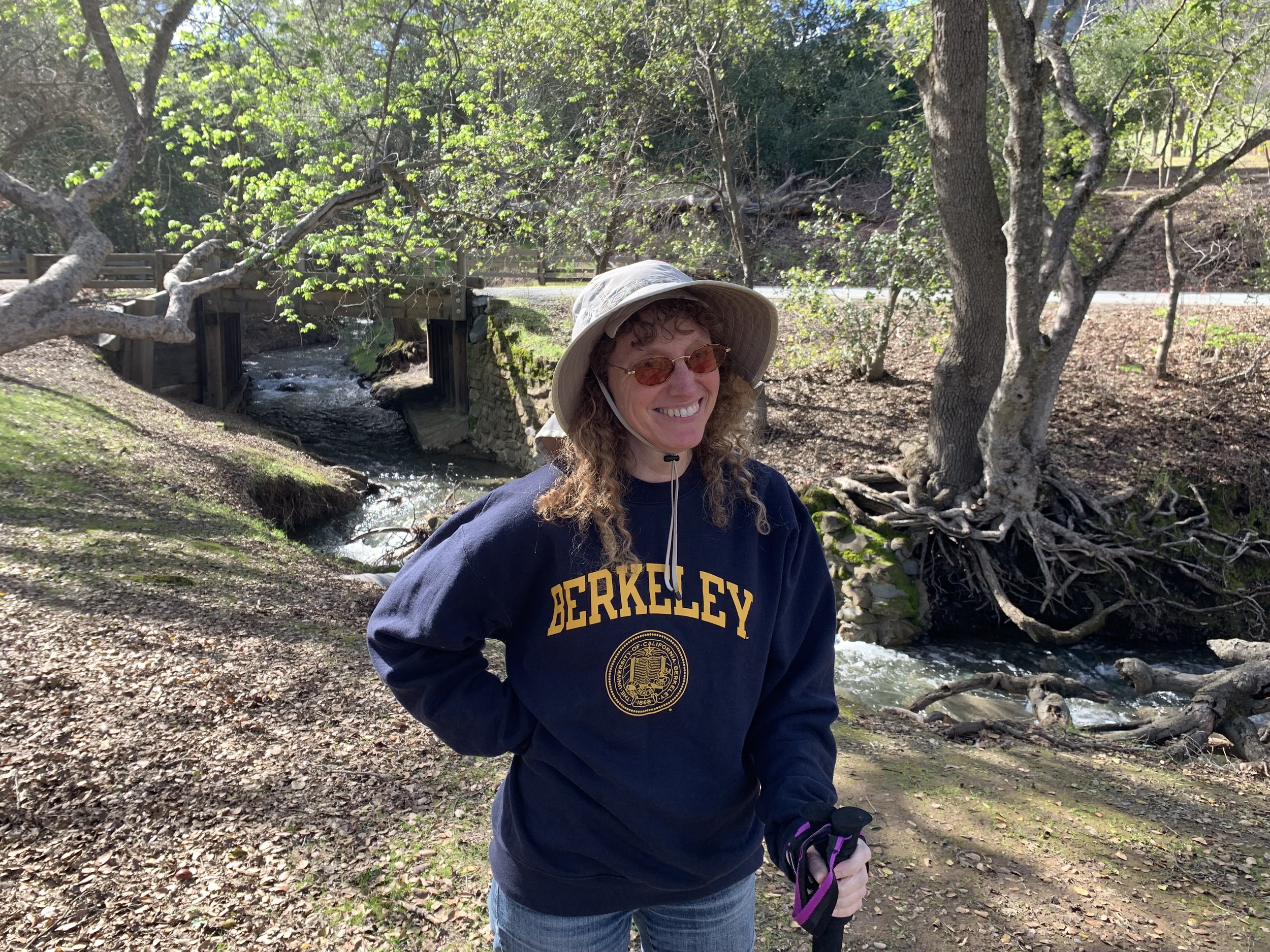
Rev. Dr. Barbara Barkley has worked for the last thirty years as both pastor and pianist/organist. She graduated from San Francisco Theological Seminary with a Master of Divinity and later received her Doctor of Ministry degree with an emphasis in spirituality and the class award in homiletics. Barbara has been co-moderator of San Francisco Presbytery, as well as co-chair of Mission and Vision Leadership committee and serving on peacemaking committee for the presbytery. She has been a leader and teacher both at conferences and for retreats. Barbara has a number of publications, including writing for the devotional These Days, two Christian Education curriculums, numerous articles and two books, Seeking Grace, and Seeking Grace, II.
Passionate about social justice as well as the liturgical arts, Barbara has served in churches in the West, Southwest and Midwest of the United States as well as been a college PCUSA mission worker in Brazil. She writes:
What I bring to any ministry setting is a passion for social justice, a love of preaching, and a deep belief that my call is primarily about empowering others in their relationships and service to God and God’s people. In all areas of ministry I believe I bring the gifts of listening to people, helping inspire and empower people, patience, steadfastness, and a deep love of and belief in the healing power of God’s gift of laughter. I envision a ministry of bringing people together to love, care, support and serve one another and the world. My ministry focuses on spiritual growth from whatever place a person starts, honoring each person’s journey as unique, recognizing that we all have much to teach as well as much to learn. I believe in building and crossing bridges of all kinds.
Barbara currently serves as pastor of Clayton Valley Presbyterian Church in the San Francisco Bay Area. For fun, Barbara loves hiking, puzzles, gardening and murder mysteries.
Through prayer and her faith community, Barbara has discerned a call to stand for the co-moderator position because of the growing divisions in our country. The call to listen to one another, hear each other’s stories, and create bridges of understanding and community stems from an understanding of what it truly means to love our neighbors as ourselves. She feels called to empower the hearing and sharing of our stories and to create communities of belonging where our stories are celebrated, and people can learn and grow from one another’s experiences.
Statement:
Today as I sat down to write my personal statement, I found myself reflecting on my
morning. I asked and was granted permission to share this, something I feel is
essential as we share our stories.
I was gathered with a group of Presbyterian teaching and ruling elders who are Spanish
speaking. The group was mostly made up of people whose primary language is
Spanish, immigrants from Central and South America. Only a couple of us who
attended were people whose first language is English. I’ll admit, I am the worst at
Spanish among my colleagues in that group, but I am working to learn, practicing as
well as taking classes at the local college. As we sat together in fellowship, my
colleagues and friends shared stories of their recent experiences with ICE and the fear
in their communities. We listened. We prayed. Still, despite the pain, there was a lot of
laughter, the sharing of amazing foods and a sense of connection and care that crossed
boundaries.
But then the pastor who called us together asked why there were only a couple of us
there whose first language was English. Where were our other gringo colleagues who
speak Spanish (or, like me, are learning Spanish)? They were invited. Why didn’t they
come? I tried to explain that people are busy, overscheduled, sometimes frantic about
the amount of work they are doing. But I knew that was only a partial answer. And my
friend who called us together named what I was thinking, “People make time for what is
important to them. Why isn’t connecting with us important to them?” I heard deep hurt
in his words. We say we care, but do we show up for one another? Do we take the
time to get to know one another? Do we cross boundaries enough to really understand
and celebrate who others are, to recognize our connections, to see one another for the
children of God we each are?
Another pastor in the group said that at Presbytery meetings, there are people he
greets, but that this is all he feels comfortable doing. He doesn’t know the other
members of Presbytery. They are friendly. But they don’t go beyond that.
As I drove home from this monthly meeting, I found myself deeply saddened by my
experience. We are people of faith. But sometimes we just give lip-service to the idea
of loving our neighbors. Loving our neighbors means meeting them, talking with them,
getting to know and understand them. We cannot do that from a distance.
Language and cultural differences are not the only things that divide us. In this time in
our country, political and theological differences also strongly divide us. We have
stopped talking to one another but instead we group ourselves into “us” and “them.”
Jesus calls us into a different way of being. Jesus shows us what it is to become
community, really listening to the Syrophoenician woman, the Samaritan woman, even a
Roman centurion (who was considered one of the oppressors). He took the time to
hear, to heal, to care.
I believe that we are called to do the same. Yes, that will take time. Yes, it will take
intentionality. Mostly, it will take faith: the faith to trust that God will be with us in our
efforts, in our steps, in our work to care for and understand those it would be easier to
“other.”
I feel strongly that my call is to be part of that conversation, to insist that this
conversation across our differences continues and deepens, to work hard to build
strong bridges of connection, faith, and unity across divides that are becoming gulfs
between us. My call is to empower others to lean into that calling as well. That begins
with my own listening to God and to others. I am far from perfect. I have growing
edges and I am not afraid to hear that I’ve made mistakes because that helps me to
learn and grow. My promise is that I will show up to hear, to connect, and to grow.
Hopefully in so doing, I also give others the opportunity to show up, hear, connect and
grow as well. That is my hope for serving as a co-moderator: to have those
opportunities to really listen but also to deeply connect others, encourage bridging, and
help us all to grow in our following of Christ in the way of loving our neighbors.